
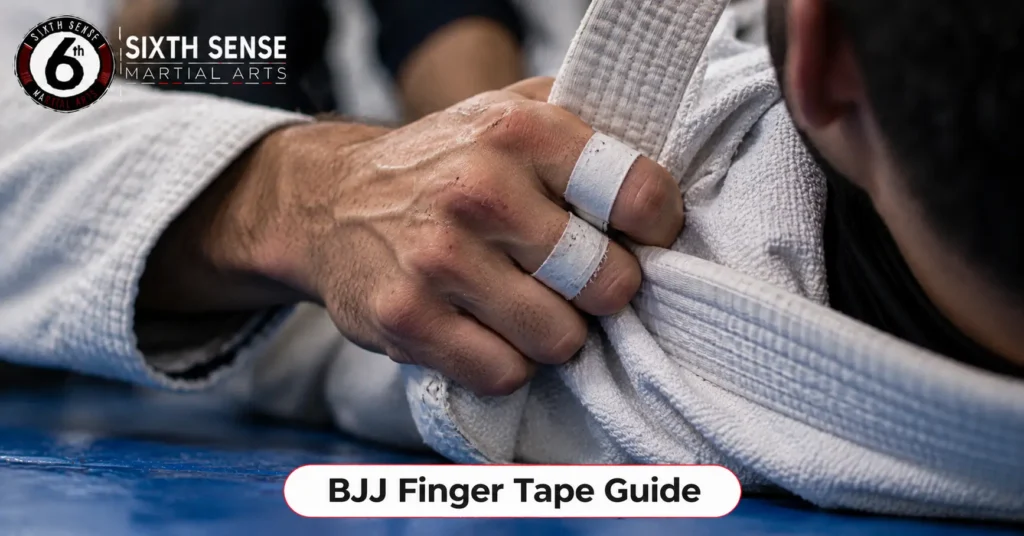
Why BJJ Finger Tape Matters
Every grappler remembers the first time their fingers ached after a long night of gripping sleeves and collars. BJJ finger tape is one of the simplest tools for dealing with that ache, yet most beginners never learn how to use it properly. At Sixth Sense Martial Arts in Coppell TX, students ask us about taping almost every week, so I pulled the best advice together in one place. Moreover, I reviewed several of the top guides online and added what we see on our own mats. In this guide you will learn why tape helps, which methods work, how tight to wrap, and when to skip it and see a professional.
What Gripping Does to Your Hands
Gripping looks easy, but it works your hands harder than most people expect. Every pull on a gi collar or sleeve loads the small finger joints, the ligaments beside them, and the pulleys that hold your tendons close to the bone. At first you only feel a mild ache after class. However, repeated rounds without rest can turn that ache into a nagging soreness that limits how often you train. Furthermore, beginners often squeeze far harder than they need to, which adds even more strain. As a result, understanding what your fingers go through helps you decide when support makes sense and when you simply need a rest day.
What BJJ Finger Tape Actually Does
Tape is a helper, not a cure. A good wrap gives your finger joints light support, limits sideways bending, and reminds you to ease off a grip when you squeeze too hard. Many grapplers also feel less fatigue and steadier grip strength during long sessions, which keeps their form cleaner late in class. On the other hand, tape cannot replace smart training, rest, or proper technique. Moreover, it will not heal a serious injury. Think of BJJ finger tape as a light brace for your knuckle, since it steadies the joint under load without stopping you from using your hand. Consequently, the goal is protection and comfort, not invincibility.
Choosing the Right Athletic Tape
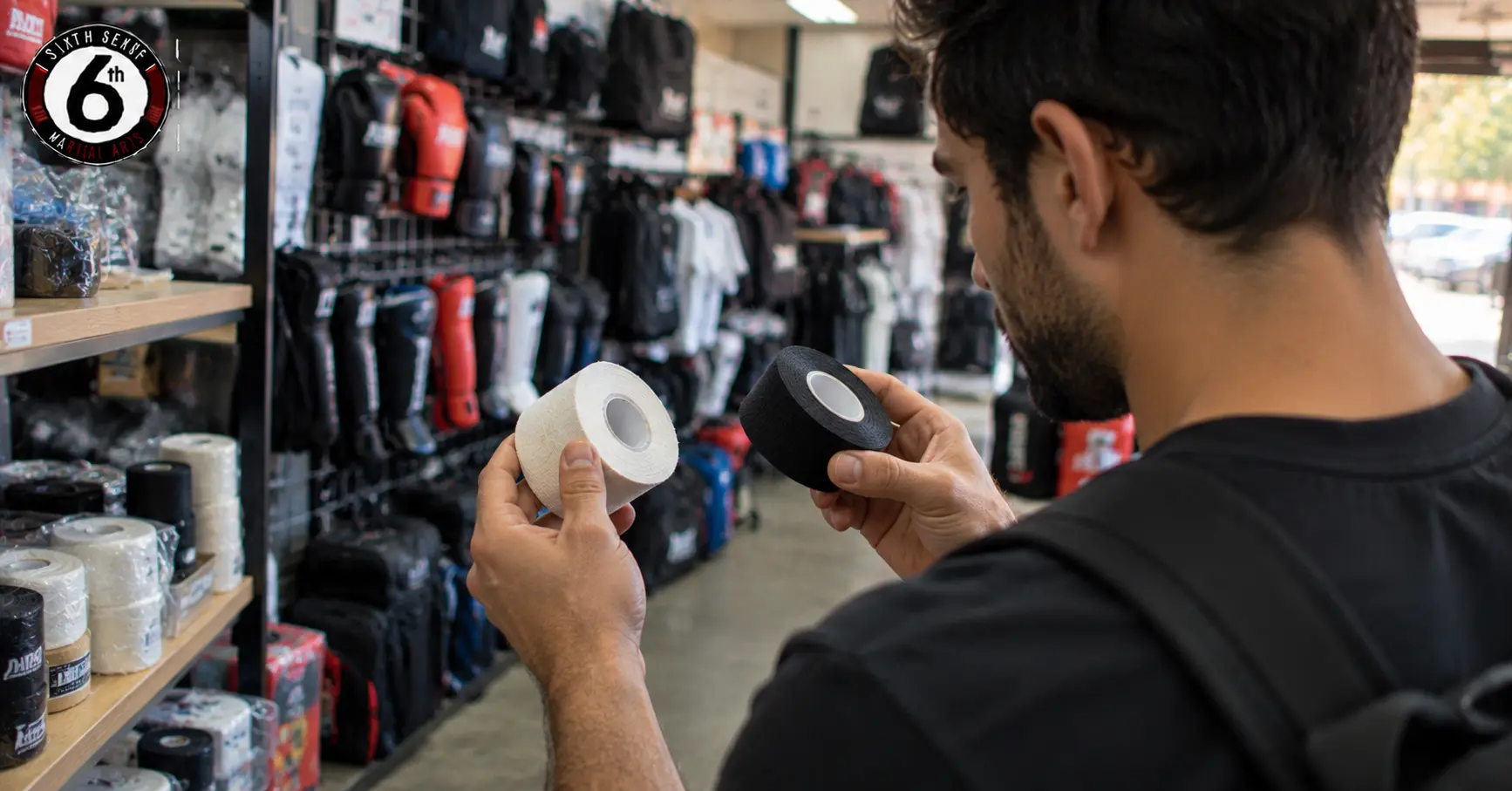
Not every roll of tape works on the mat. Most grapplers choose rigid athletic tape because it holds up against sweat and friction, and the zinc oxide type is a common pick. However, thick bulky tape can limit finger movement, so look for a thin narrow roll made for fingers. Half inch width suits most hands, while larger fingers may need a bit more. Meanwhile, some students prefer tape with slight stretch for long sessions. Look for strong adhesive, a clean tear without scissors, and skin friendly material if you react easily. Moreover, test any new tape at home first, because a wrap that feels fine for five minutes can feel different after an hour of rolling.
Gear You Need for BJJ Finger Tape
You do not need much to start. Keep a small pouch in your gym bag with a roll of narrow tape, a few pre-cut strips, and a pair of small scissors for trimming edges. Add skin prep wipes or a dry towel, since wet hands make tape slide off. In addition, a little foam or gauze helps when you tape two fingers together. Moreover, pre-cutting strips at home saves precious minutes before class and keeps the lines straight. Finally, carry a spare roll in case yours runs out midweek. Having everything ready turns BJJ finger tape into a quick habit instead of a rushed chore before the warm up starts.
The X Wrap Method
The X wrap is the most popular way to support a finger joint without stiffening the whole finger. Start with a snug anchor ring around the base of the finger. Next, run the tape diagonally across the knuckle, then bring it back down at the opposite angle so the two passes form an X over the joint. Finish with another anchor ring and trim the end. Keep the wrap snug, not tight. Moreover, bend your finger a few times before you leave the bench to confirm you can still grip. This simple wrap suits most beginners and everyday training because it protects the joint while leaving the hand free to work.
Buddy Taping for Sore Fingers
Buddy taping joins a sore finger to a stronger neighbor, for example the ring finger to the middle finger. The healthy finger shares the load and limits risky side to side bending. Place a thin piece of foam or gauze between the two fingers first, because trapped sweat can soften and break down the skin. Then anchor tape near the base and near the top of both fingers while leaving the joints free enough to make a fist. As a result, you can keep training lightly while the sore finger settles down. However, if pain stays sharp or swelling grows, stop and see a professional instead of taping through it.
The Figure 8 Wrap
Some grapplers use the figure 8 wrap for extra stability around the middle knuckle, especially after a mild strain. Hold the finger with a slight bend, anchor at the base, then cross the tape over the joint in a figure 8 pattern before sealing the wrap. This setup limits sideways movement more than a basic X while still allowing a working grip. In addition, it helps people who tend to hyperextend their fingers when they pull on collars. Nevertheless, it takes practice to get the tension right. Therefore, try it at home first and ask a coach to check your first few wraps before you roll.
The H Tape for Pulley Strain
Some experienced grapplers cut a strip into an H shape to support an irritated finger pulley. The center bridge sits across the palm side of the finger while the side straps wrap around it. People usually apply it with the finger bent about sixty degrees so the tape supports the joint in a working position. However, pulley pain can signal a real injury, and tape does not treat it. Because of that, treat this method as a short term comfort tool and book a visit with a sports medicine professional if the pain lasts. Never use tape to hide a problem that needs real attention.
Taping Your Thumb
Thumbs take a lot of abuse in gi grips, especially when you hold thick lapels or pants. A simple thumb wrap can add support when you grab heavy opponents. Anchor around the base of the thumb, cross the tape over the joint, and finish with a second anchor. Make sure you can still touch your thumb to your fingers comfortably. Moreover, avoid wrapping so tightly that your thumb loses feeling. Many students only tape the thumb on heavy gi nights and leave it bare for lighter drilling. That balance keeps support available without making tape a daily crutch for every single session.
Safety Checks After You Wrap
A wrap only helps if it is safe. First, press your fingernail and release it, then watch the color return. It should come back in under two seconds, and if it takes longer, the tape is too tight. Second, make a fist and open your hand a few times to confirm you can move normally. Third, watch for numbness, tingling, or a purple tint, and remove the tape right away if you notice any of them. Moreover, run these checks every time, even when you feel experienced. In short, snug support is good, but cutting off blood flow is never worth a better grip.
BJJ Finger Tape Mistakes to Avoid
Most taping problems come from a few simple habits. First, many students wrap far too tight and cut off circulation. Second, some tape over open cuts or damp skin, which invites irritation and slides off fast. Third, others tape every finger every day and never give their hands a break. Apollo MMA makes a fair point here, since rotating in untaped days helps your fingers build natural resilience. Fourth, people reuse the same wrap all day, which traps sweat against the skin. Finally, many ignore pain and tape harder. Consequently, treat tape as support for healthy training, not a way to push through an injury.
Gi and No Gi Taping
Gi training usually stresses the fingers more because you hold thick fabric under heavy load. As a result, many grapplers tape most often before gi classes, especially for collar and sleeve grips. However, no gi still puts strain on your hands through wrist control, underhooks, and scrambles. Finger tape works in both formats, so you do not need a separate method. Meanwhile, keep wraps slim for no gi so your hand can move freely. If you train both styles, adjust the amount of tape to how your fingers feel that day. Listening to your hands beats following a fixed rule every time.
Taping Before or After an Injury
Should you tape early or only after something hurts? Both approaches have a place. Taping before problems appear can protect fingers during heavy weeks, hard gi sessions, and tournament prep. On the other hand, taping after a minor tweak can ease discomfort while you keep training lightly. However, many athletes tape too late, after a small ache turns into a bigger limit. Therefore, pay attention to early signs like stiffness in the morning or soreness that lingers after class. In addition, remember that tape supports healthy joints but does not fix damaged ones. When pain does not improve, rest and get checked by a professional.
Taping for Competition
Tournament day is not the time to experiment. Most events allow finger tape, but rules can change, so check the specific tournament rules before you pack your bag. Practice your wrap in training for several weeks so it feels automatic when nerves hit. Moreover, bring a spare roll and extra pre-cut strips, since tape can loosen between matches. In addition, wrap your fingers early enough to test your grip, then recheck the tape before you step on the mat. Consequently, a calm, familiar routine keeps your hands protected and your mind focused on the match instead of your gear or your nerves.
Taking Care of Your Skin
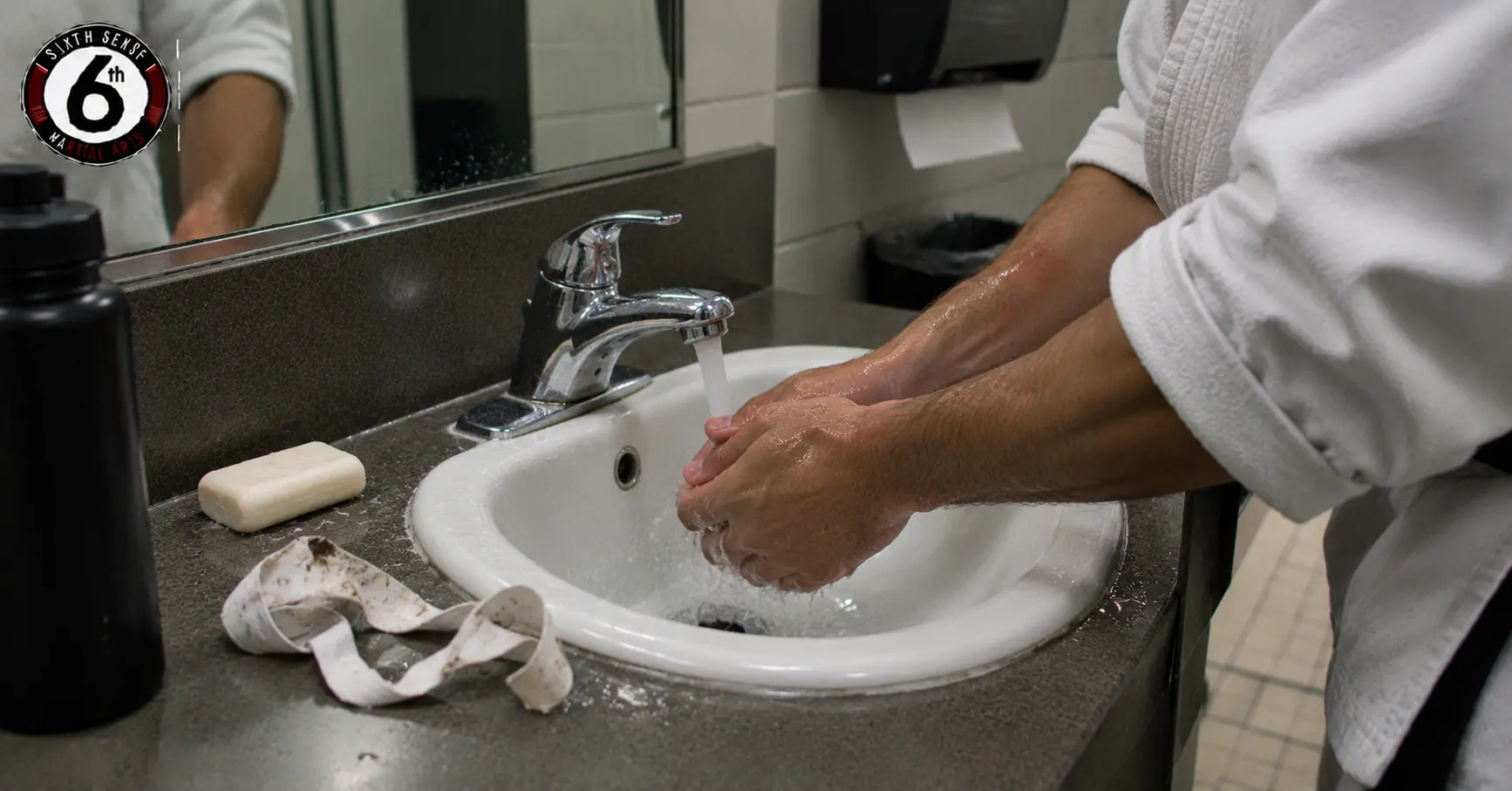
Tape sits on your skin for an hour or more, so give that skin attention. Remove the wrap right after class, peeling slowly in the direction of hair growth so you do not tear the surface. Then wash your hands with soap and let them air out. Moreover, trim your fingernails and keep small cuts clean before taping. If you notice redness, itching, or a rash, switch to hypoallergenic tape and take a break. In addition, never tape over broken skin. Healthy skin keeps you on the mat, and a skin infection can sideline you far longer than a sore finger ever will.
When to See a Professional
Tape cannot solve every hand problem. See a doctor or sports physical therapist if you notice sharp pain, swelling that does not settle, bruising, a finger that looks crooked, or numbness that sticks around. Moreover, pain that wakes you at night or a finger that will not fully straighten deserves a prompt check. Do not keep rolling and hope it fades. This article is for general information and is not medical advice. Because early care often shortens recovery, getting a problem checked quickly protects your long term training. A short break now beats months away from the mat later, so choose caution when something feels wrong.
Taping Tips at Sixth Sense
Reading about wraps helps, but seeing one done helps more. At Sixth Sense Martial Arts, 817 S MacArthur Blvd in Coppell TX, head coach Matheus has over 15 years of experience and the team welcomes complete beginners. Moreover, you can attend a free trial class, watch how students manage their hands, and ask the coaches about your own grip habits. In addition, our gym serves members from Valley Ranch, Irving, Carrollton, Grapevine, and Lewisville. Bring your tape to your first visit and ask for feedback on your wrap. Good technique starts with good habits, and healthy hands make every roll better.
Conclusion
BJJ finger tape is a simple tool that helps you protect your finger joints, support your grip strength, and keep training through busy weeks. Choose narrow rigid tape, learn one or two reliable methods like the X wrap and buddy taping, and always run the safety checks before you roll. Remember that tape supports healthy hands but does not replace rest, good technique, or medical care. Moreover, rotate in untaped days and watch your skin. If pain lingers, see a professional. Visit Sixth Sense Martial Arts in Coppell TX for a free trial class and let the coaches help you build habits that keep your hands strong.
Contact Us
Have questions about our classes or training programs. We would love to hear from you. Reach out to us today and let us help you start your martial arts journey the right way.
